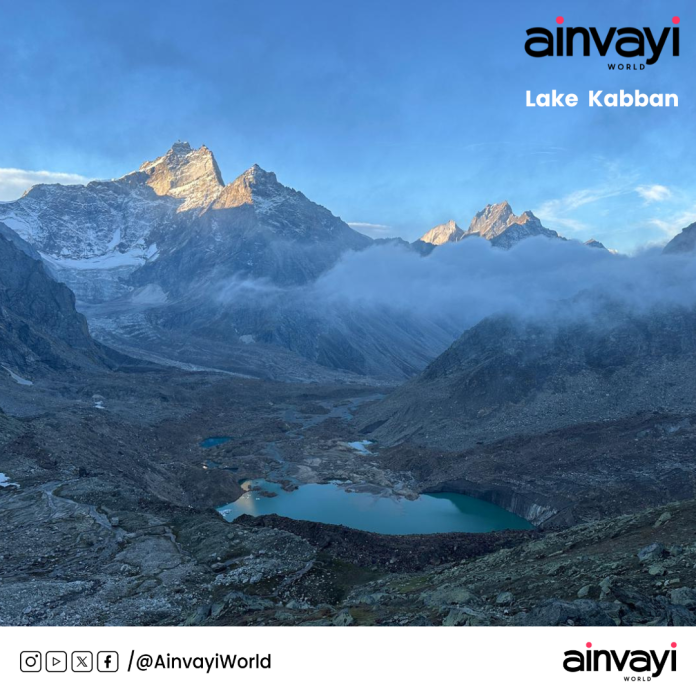

Far from the mainstream travel routes, commercially developed landscapes or the curated journeys of social media, Kabban Valley, lying in the lofty folds of the Greater Himalayas in Kishtwar district of Jammu and Kashmir, is a quiet sanctuary where meadows bloom, monasteries whisper, and crystal streams carve through rugged mountains.
When John Muir, the Scottish-born American naturalist, famously known as ‘John of the Mountains’, wrote about the ‘wholesome wilderness’ of the high mountains, he captured a truth that still resonates in Kabban Valley — a landscape largely untouched, unapologetically remote, and steeped in the quiet grandeur of the Greater Himalayas.
Tucked away in the higher reaches of Paddar in Kishtwar district — a region historically known for its saffron fields and sapphire mines — Kabban Valley lies about 290 kilometers from Jammu city. Travelers can journey from Jammu to Kishtwar town (roughly 250 kilometers), then continue for another 62 kilometers to Gulabgarh, the last bustling settlement of the region. From there, a narrow mountain road leads to Sohal (about 10-12 kilometres) and onward to Kabban, where the valley opens up like a secret — revealed only to those willing to make the journey.
The landscape of Kabban Valley is a harmonious blend of clear glacial streams that nurture a rich diversity of flora and fauna and eventually merge into the Chenab basin, snow-capped peaks of the Greater Himalayas that rise dramatically into the azure sky, and Buddhist hamlets that have sustained their rhythm of life for centuries. Through spring and summer, a variety of wild flowers carpet the valley, adding bursts of color — from delicate pinks to radiant yellows — creating an ever-changing panorama. The higher reaches of Kabban host rare Himalayan species, offering fleeting glimpses of elusive wildlife amid tranquil surroundings and making it a paradise for bird watchers, wildlife enthusiasts, and nature photographers.
What enriches Kabban’s appeal is its deep-rooted cultural heritage preserved by the indigenous communities that have thrived in this remote valley for generations. Their traditional lifestyle — reflected in distinctive festivals, crafts, cuisines, and warm hospitality — invites travellers to discover a way of life unique to this part of the Himalayas. This vibrant cultural tapestry, blended with the raw natural splendor, and traces of modernity, delivers a holistic experience — far removed from urban distractions. Here, one feels life slowing to a tranquil stillness.
Historically, Paddar was ruled by local Rajput rulers and later came under the influence of the Chamba rulers, before being annexed to Kishtwar in the 19th century by the Dogra rulers of the erstwhile princely state of Jammu and Kashmir. In Buddhist lore, Paddar — including Kabban Valley — forms part of a broader zone shaped by Tibetan Buddhist influence. The earliest Buddhists in Kabban are believed to have migrated from Ladakh, Zanskar, and eastern Tibet, bringing with them their faith and practices.
Tashi, a local guide and seasoned trekker in the region, shares that this valley has long been home to Buddhists and other native communities who have sustained themselves through agriculture and pastoralism. The Buddhist population of Kabban and its surrounding hamlets—small yet significant—lends the valley a distinct cultural and spiritual identity, reflected in the local gumpas (Buddhist monasteries) that dot the landscape.
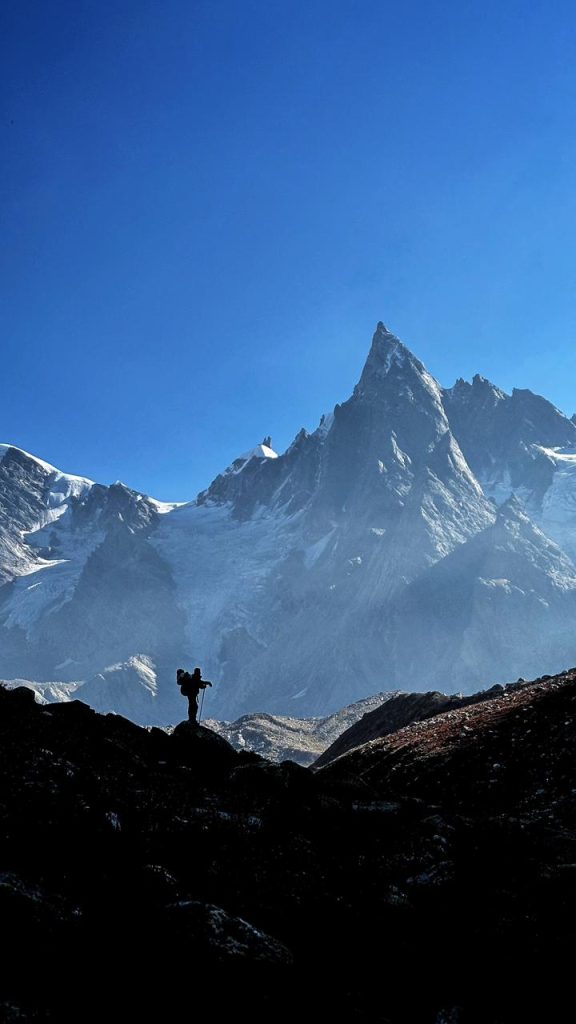
Locals recall that during the early 1980s, the region was often visited by European and American trekkers who were keen to explore the virgin Greater Himalayas. The pointed peak near Kabban, called ‘Tipungde’ — is a challenge attempted only by a few adventurous climbers. Though this trend gradually declined in the subsequent decades, recent years have seen a revival, with foreign trekkers once again making their way back to the Greater Himalayas.
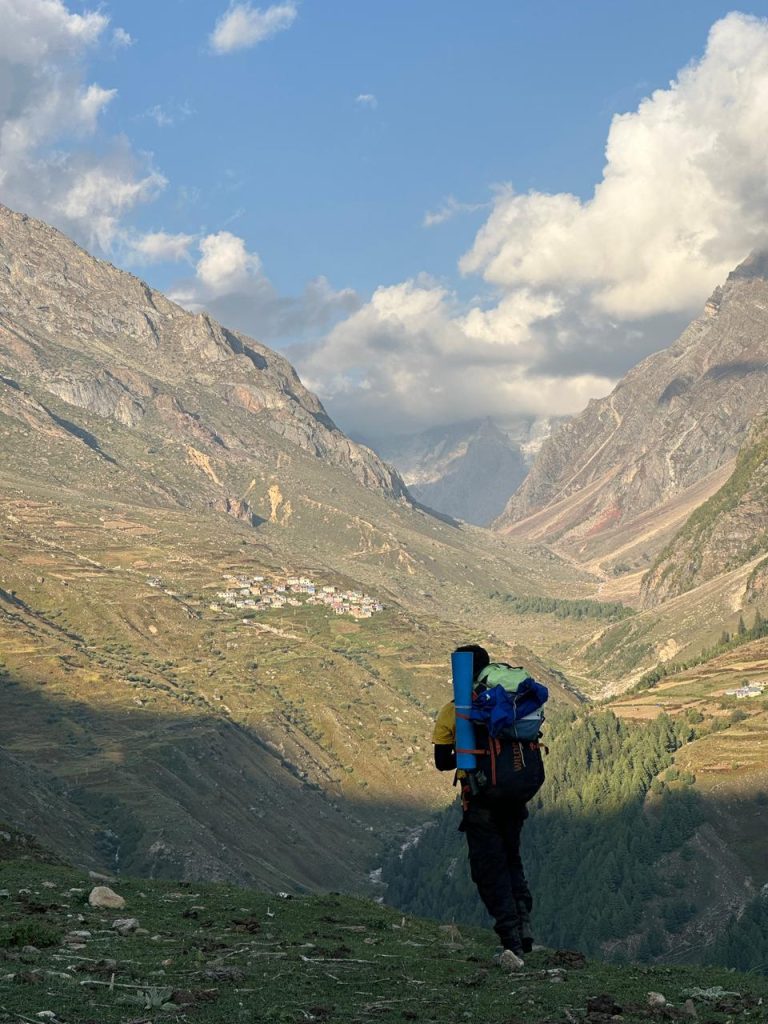
Kabban Valley’s rugged terrain offers exhilarating trekking routes that wind through secluded hamlets, dense forests, verdant meadows, and sheer cliffs — promising both challenge and awe.
Spending a night atop a peak in the Greater Himalayas is an experience that transcends a simple camping trip; it feels like a temporary, humbling stay among the clouds as the sky continues to transform into a canvas of impossible colors — fiery oranges melting into deep purples and soft pinks — painting the valley and peaks in an ever-shifting light.
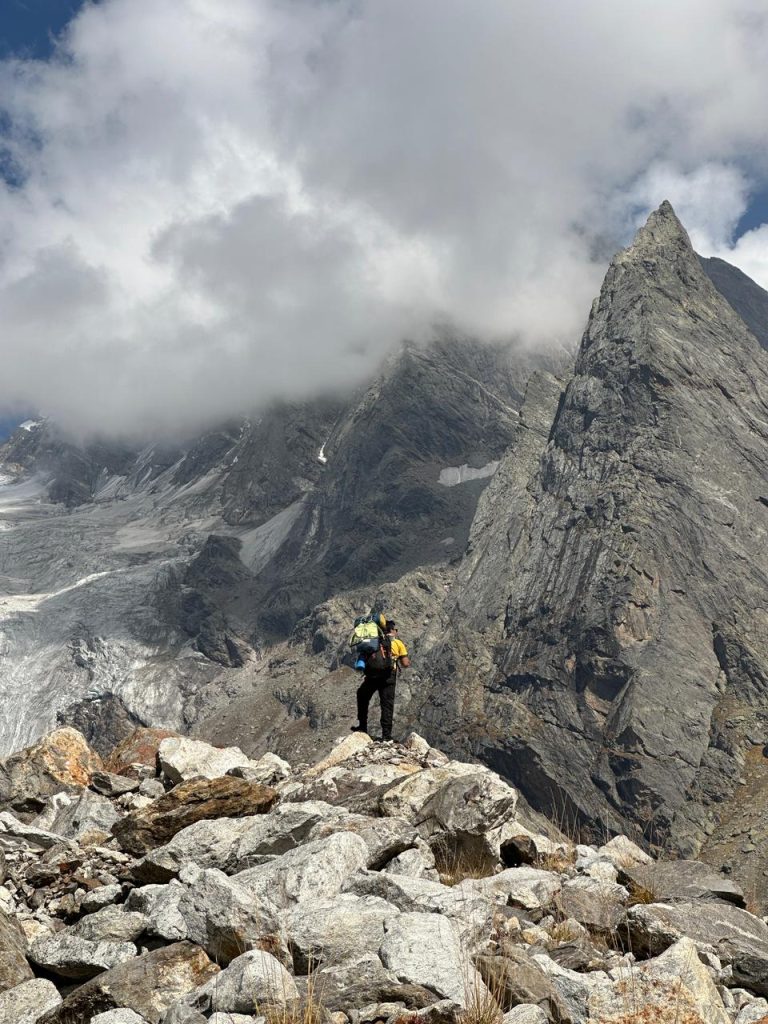
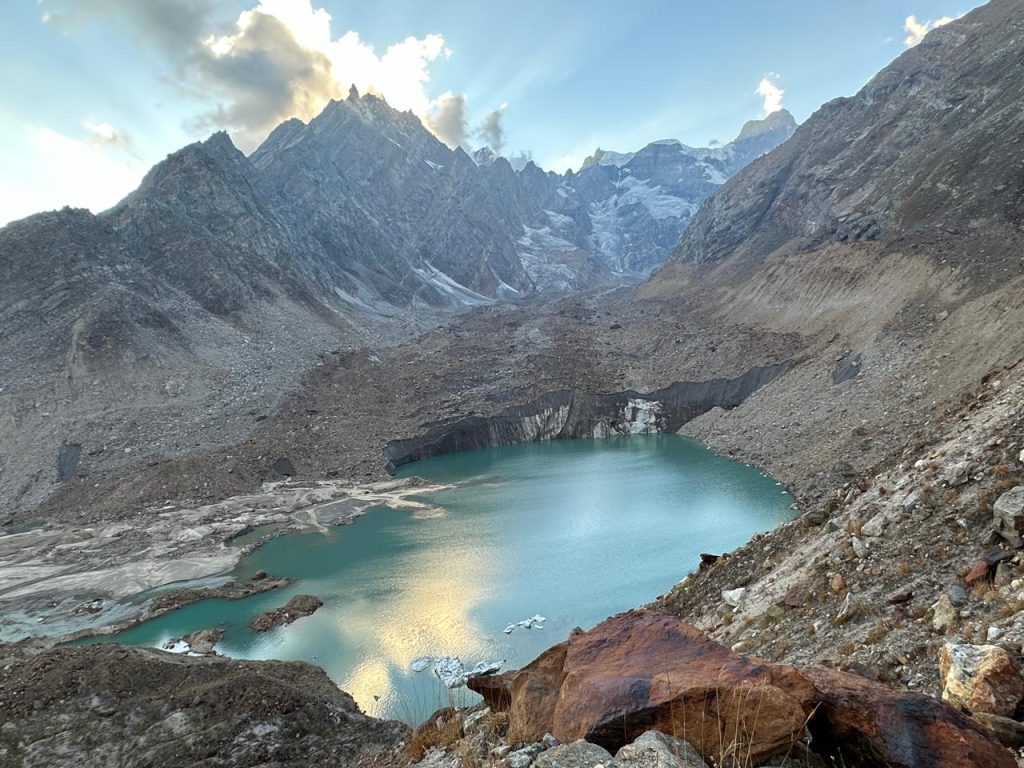
As the air cools and the shadows stretch, the sunset unfolds like a grand performance. There’s a quiet that settles on the summit after the last ray of sun fades from the sky — a silence so profound it seems to absorb every sound from the world below. One feels like a privileged observer, watching the Earth gently tuck itself in for the night. As the sun finally dips below the horizon, a sudden, brisk chill reminds you of your elevation — and of your smallness in this vast, breathing landscape. But the true magic begins only hours later!
Far removed from the light pollution of civilization, the night sky reveals itself in a way few ever witness. The stars are no longer mere pinpricks of light; they are countless, brilliant diamonds scattered across a velvet-black canvas. The Milky Way arches in a luminous, shimmering band right overhead, so vivid and detailed it feels close enough to touch. As you gaze at the sky, lying in your sleeping bag beside the tent, you are overcome by a profound sense of solitude and cosmic connection — feeling, at once, completely isolated from the world and yet entirely a part of the universe.
One feels almost like a renunciate at the very pinnacle of the world. The long night culminates in an unforgettable dawn. Darkness slowly softens, and you wait patiently for the first hint of light. Then, without warning, a thin line of gold and crimson appears on the eastern horizon. The light spills over the peaks, chasing away the shadows and revealing a world freshly washed in golden glow. Below, the valleys, at times, remain swathed in a thick, ethereal veil of fog, giving you the surreal feeling of truly being ‘above the clouds.’
Despite its growing allure among niche travellers, Kabban Valley remains largely ‘unexplored’ and ‘undeveloped,’ maintaining the conscious balance between ecological preservation and tourism. At a time when destinations across the world are facing the impacts of overtourism and commercialization, the raw beauty of Kabban Valley stands as a testament to the enduring harmony between nature and culture in the Greater Himalayas — a harmony that must be preserved with both responsibility and reverence.
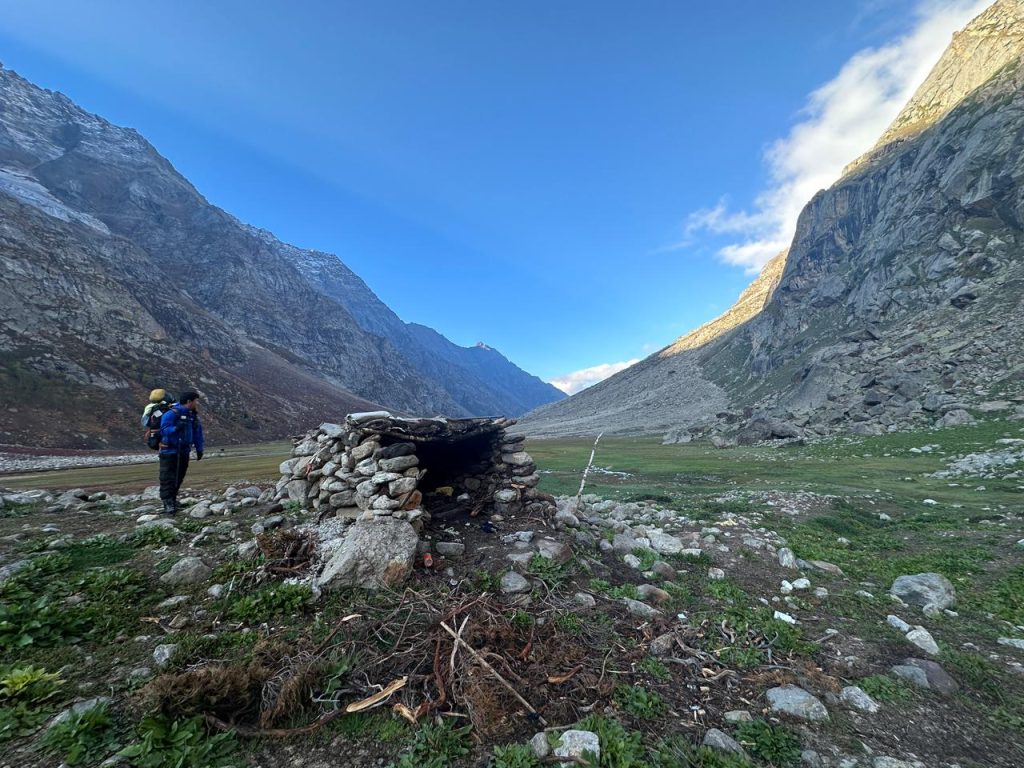
The best time to visit Kabban Valley is from late spring to early autumn, when the weather is inviting. Travellers should be encouraged to respect local customs and follow environmental guidelines to help protect the valley’s fragile ecosystem. Whether you seek spiritual rejuvenation, cultural immersion, or the thrill of high-altitude adventure, Kabban offers a Himalayan experience that lingers long after the journey — in memory and in soul.